
Roy has always been a town of arrivals. The east bench filled up fast in the 1950s and 1960s with starter homes for families tied to Hill Air Force Base and the old supply depots. The turnover never really stopped. Orders come through, one family packs up, another unloads a truck, and the house carries on with new keys every few years.
That rhythm keeps neighborhoods lively, but it is hard on plumbing. Every owner leaves something behind, such as a softener programmed for someone else’s household or a shutoff that only turns if you know the trick. If you have just moved in, an early visit from a local team like DJ’s Plumbing can save you from guessing. The Roy crew handles inspections, leak detection and full repipes for homes and commercial spaces, and you can book a morning, evening or weekend slot at no extra charge. Even if you hold off on that, it helps to understand what you have inherited.
Two Water Systems Sharing One Yard
The first surprise for many newcomers is that a Roy property often has two separate water supplies. Culinary water comes into the house for drinking, cooking and bathing. Secondary water is pressurized irrigation that feeds the lawn and garden through its own lines, valves and spigots.
These two systems should never meet. Secondary water is untreated, so a spigot connected to it is not safe for filling a pet bowl or a kiddie pool. Previous owners sometimes added hose bibs without labeling them, so walk the yard and figure out which taps belong to which system before summer. The Roy Water Conservancy District manages secondary water locally and is the best source for the season’s schedule and rules. The irrigation season ends in fall, and sprinkler lines left full of water through a hard freeze tend to crack at the valves and heads.
Pipes That Reveal Their Age
Roy grew in waves, and the pipes in your walls usually match the decade your house was built. Homes on the eastern bench from the postwar boom often started with galvanized steel supply lines and cast iron drains. Construction later moved to the west side of town from the 1980s until the mid 2000s, which brought copper, some plastic experiments, and eventually PEX.
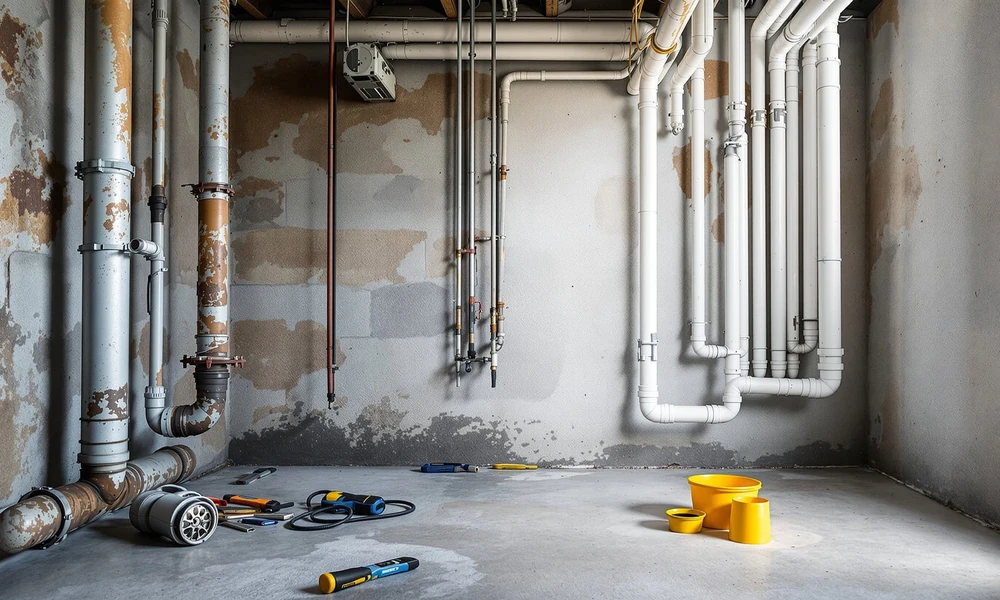
You can usually identify your pipes in a few minutes by checking the unfinished parts of the basement, the area around the water heater, or the spot where the main line enters.
- Dull gray pipe joined with threaded fittings is probably galvanized steel, which rusts from the inside and slowly restricts flow.
- Flexible gray plastic tubing held by metal crimp rings is often polybutylene, a material installed in many homes from the late 1970s to the mid 1990s that is known to fail without much warning.
- Red, blue or white flexible tubing is PEX, the modern standard.
- Copper is common in many decades and generally reliable, although green crust around joints suggests slow seepage.
If you see weak pressure upstairs or brownish water on the first morning draw, aging galvanized pipe is a likely cause.
The Valve Nobody Labeled
Ask a new homeowner where the main water shutoff is and you will often get a long pause. In many Roy homes it is in the basement, along the front wall where the line comes in from the street. Older gate valves can seize after years without being touched, and the worst time to find that out is while water is pouring through a ceiling.
Spend an afternoon getting familiar with the house by going through these steps.
- Find the main shutoff and turn it gently a quarter turn to make sure it moves, then return it to open.
- Read the label on the water heater. The serial number usually encodes the manufacture date, and most tanks begin to struggle somewhere past ten years.
- Turn off every fixture and look at the water meter. If the leak indicator is still spinning, water is escaping somewhere.
- Run each faucet and flush each toilet while someone watches the basement floor drain and the ceilings below bathrooms.
- Use a flashlight to look under every sink for stains, warped cabinet floors or a damp smell.
Put a tag on every valve you find. The next person to need that information might be you, half awake at two in the morning.
Hard Water Leaves a Mark
Water along the Wasatch Front is hard, and you can see the evidence on faucet aerators, shower glass and the bottom of the water heater. If the previous owner left a softener, do not assume it is working. Check the salt level, make sure the bypass valve is not stuck in the bypass position, and reset the hardness and household size settings for your family. A unit set up for two retirees will not keep pace with a family of six.
Water heaters are especially affected by scale. Sediment builds up on the bottom of the tank, wastes energy, and causes the popping and rumbling sounds many people hear as their system ages. Flushing the tank once a year slows this down considerably.
Weekend Projects You Never Approved
Houses that change hands often accumulate a lot of amateur repairs. Some hold up for decades. Others are just waiting for the wrong day. Common signs include ribbed flexible drain pipe under sinks, traps made from mismatched pieces, thick layers of tape around slip joints, and a refrigerator line tapped into a copper pipe with a small clamp-on saddle valve. Basement bathrooms added later deserve a careful look too, because drains without proper venting tend to gurgle, smell, or empty slowly.
Gas connections need the same attention. Old appliance connectors behind dryers and stoves can be decades old. If you ever smell gas, leave the house first and make the call from outside.
Underneath Those Mature Trees
The big shade trees that make the older streets in Roy so pleasant are also a common reason sewer laterals fail. Roots find their way into older clay or cast iron joints and gradually block the line. In most cases, the homeowner is responsible for the lateral from the house to the city main, and its condition rarely comes up during a sale.
Warning signs include a toilet that gurgles when the washer drains, a basement floor drain that backs up after heavy water use, or a recurring clog that keeps coming back no matter how often it is cleared. A camera inspection shows you exactly what is happening down there, which is far better than guessing.
Your First Winter Is the Real Test
Fall is the right time to prepare for cold weather. Disconnect garden hoses so frost free spigots can drain properly. Check pipes running through the garage or along exterior walls and add insulation where they are exposed. If your job involves temporary duty or long stretches away from home, keep the heat set at a reasonable level and consider having someone check the house while you are gone.
Then start a simple notebook. Write down where every valve is, the age of the water heater, what the sewer camera showed, and which spigot is connected to which water system. In a town where houses change hands this often, the most helpful thing you can do is leave the next family a lot less to figure out.