
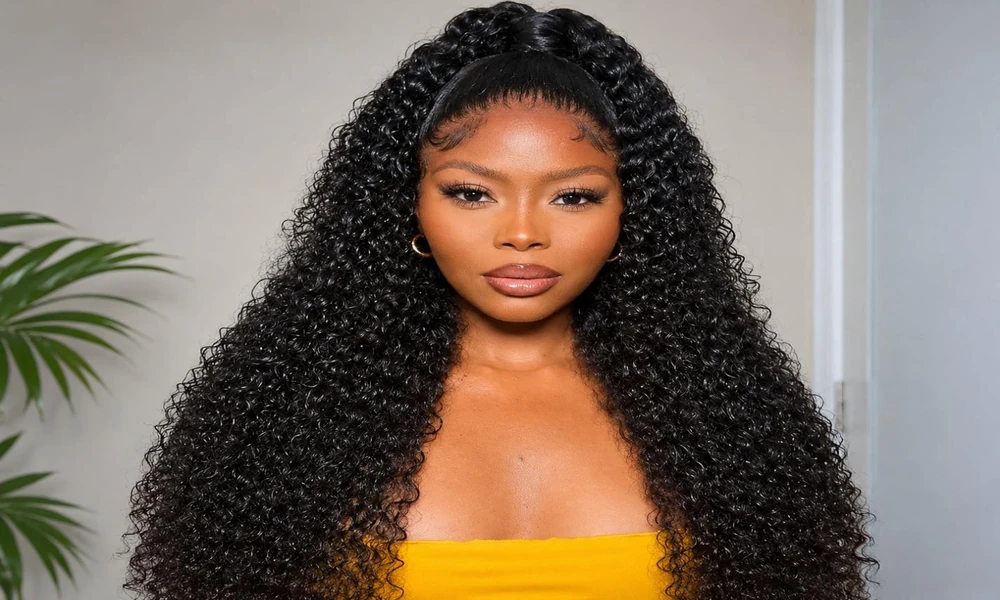
Beautiful, full-bodied curls can make a hairstyle feel effortlessly stylish, but finding premium curly extensions that justify their price is not always easy. Burmese curly hair has become an appealing option for women who want natural-looking volume, soft movement, and a textured finish. However, with some bundles costing considerably more than standard curly weaves, shoppers understandably wonder whether the extra expense is worthwhile. Does a premium price guarantee better quality? Will the curls remain beautiful after several washes and installations? The answers depend on more than the name printed on the packaging. Understanding hair authenticity, texture, sourcing, durability, and maintenance requirements can help you decide whether this type of hair fits your lifestyle, styling preferences, and budget.
What Makes Raw Burmese Curly Hair Different?
Natural hair comes in many beautiful textures, from loose waves to tightly defined coils. For women who appreciate fullness and realistic curl movement, Raw Burmese Curly Hair Extensions can be an attractive option. These extensions are typically marketed for their textured appearance, voluminous finish, and ability to create hairstyles that look less uniform than some commercially processed curly weaves.
The term “raw hair” generally describes human hair that has not undergone chemical texture alteration or extensive processing. Virgin hair is also commonly described as chemically untreated, although retailers sometimes use these terms differently. Because there is no universally enforced definition across the extension industry, shoppers should ask sellers exactly what their labels mean.
Authentic, naturally curly hair may exhibit slight differences in curl diameter, density, and movement between bundles. These variations can contribute to a realistic appearance, although they also mean that achieving a perfectly consistent finish may require careful bundle selection.
Compared with conventional deep curly extensions, Burmese curly textures may have a less uniform curl arrangement, depending on the actual hair supplied. Deep curly products are often sold in relatively consistent patterns, sometimes created through processing. Neither option is automatically superior. The best choice depends on whether you prefer controlled curl definition or a more naturally varied appearance.
Importantly, a raw label does not prove that hair originated in Myanmar or that it has never been altered. Authenticity should be supported by transparent sourcing information and realistic product descriptions.
Why Does Premium Burmese Curly Hair Cost More?
The price of premium curly extensions often reflects several factors, including sourcing, collection, sorting, length, and manufacturing. Hair that has been carefully collected, preserved, and prepared with minimal alteration can require more specialized handling than mass-produced extensions. However, a higher retail price does not automatically establish better sourcing practices or hair quality.
Length also influences pricing. Longer strands are generally harder to source in consistent quantities, while fuller bundles may contain more usable hair. When comparing products, pay attention to the stated bundle weight, length-measurement method, density, and overall fullness rather than relying on the advertised length alone.
Women with naturally textured hair should also consider how closely an extension matches their preferred finish. Shoppers comparing theBest Curly Hair Extensions should evaluate curl compatibility, realistic movement, construction quality, and maintenance expectations instead of assuming that the most expensive product will deliver the best results.
Another consideration is whether the curl pattern occurs naturally or has been modified through steam treatment or chemical processing. Some sellers also charge more for purported single-donor hair, but such claims can be difficult to verify independently. Single-donor sourcing does not automatically guarantee better performance than carefully selected mixed-donor hair.
Retailer expenses, quality-control procedures, packaging, and profit margins also contribute to the final selling price. Ultimately, shoppers should look for clear specifications and evidence of quality before deciding whether a premium price is reasonable.
Is Raw Burmese Curly Hair Worth the Investment? Five Things to Consider
Whether expensive curly hair is worthwhile depends on how frequently you wear extensions, your desired appearance, and the amount of maintenance you are willing to perform. Before purchasing, consider these five practical factors.
1. Longevity and Reusability
High-quality human hair bundles may be reusable across multiple installations when properly maintained. However, no seller can guarantee a specific lifespan without considering how the hair is worn, cleaned, detangled, and stored. Excessive heat, rough brushing, and chemical treatments may shorten its useful life.
For women who frequently wear sew-ins, reusable bundles can make a higher upfront investment more economical. Ask sellers about realistic durability expectations and review feedback from customers who have used the hair for several months, not just immediately after installation.
2. Natural-Looking Texture and Blending
Texture compatibility is particularly important when blending extensions with natural hair. Burmese curly textures can complement some naturally curly patterns, especially when curl diameter, density, and overall volume are similar.
However, not every Burmese curly bundle will blend seamlessly with tightly coiled 4A-4C hair. Some wearers may prefer a closure, leave-out-free installation, or another texture that more closely matches their own curls.
3. Styling Versatility
Curly extensions offer several beautiful styling possibilities, including layered sew-ins, voluminous bobs, half-up hairstyles, and side-parted curls. Their fullness can make relatively simple hairstyles appear polished without extensive daily manipulation.
Some authentic human hair extensions can also be straightened, but repeated heat exposure may loosen the original curl pattern permanently. If preserving curl definition is important, minimize high-temperature styling and follow the supplier’s heat recommendations.
4. Maintenance Requirements
Curly bundles require consistent attention to remain manageable. Gentle detangling, suitable conditioning products, and occasional curl refreshing help maintain definition while reducing unnecessary friction.
Detangle carefully in sections, starting near the ends and working upward. Avoid aggressive dry brushing, and use a satin bonnet or pillowcase at night to reduce tangling. Extensions should also be dried thoroughly after washing, especially around the wefts and installation foundation.
5. Cost Per Wear
A practical way to evaluate expensive extensions is to calculate their cost per wear. For example, a $300 set used for six installations costs approximately $50 per installation, excluding styling and maintenance expenses. A $150 set that remains wearable for only two installations costs $75 per installation.
This does not mean expensive hair always lasts longer. It simply demonstrates why durability, actual usage, and ongoing maintenance costs matter more than the original purchase price.
How to Avoid Wasting Money When Buying Burmese Curly Bundles
Before committing to premium extensions, investigate the product beyond its promotional photographs. Attractive studio lighting and professional styling can make almost any bundle look impressive, so focus on evidence showing how the hair performs during everyday use.
Examine real customer photographs and videos. Look for examples recorded after washing, air-drying, and repeated styling. These can reveal more about curl behavior than freshly styled product photographs.
Compare wet and dry curl patterns. Curly hair often appears longer when wet and shorter as it dries. Request both views to understand the texture’s actual appearance and shrinkage.
Confirm bundle weight and length. Curly extensions are often measured with the strands stretched. A 20-inch curly bundle may appear significantly shorter when worn naturally. The number of bundles required for a full sew-in depends on the length, density, bundle weight, head size, and desired fullness. Two or three standard-weight bundles may work for some installations, while longer or fuller styles can require additional hair.
Investigate shedding and tangling claims. A few loose strands during normal handling are not necessarily evidence of poor quality. However, excessive shedding, persistent matting, or repeated complaints about tangling deserve attention. Be cautious of retailers promising absolutely no shedding or maintenance.
Ask detailed processing questions. Find out whether the extensions have been steam-treated, chemically curled, colored, or coated to improve their initial appearance. Ask whether sourcing claims can be substantiated rather than assuming the term “raw” is sufficient proof.
Review store policies before purchasing. Check whether returns or exchanges are allowed after opening the packaging, washing, or installing the hair. Understand shipping charges, return deadlines, and how quality complaints are handled.
Compare the complete purchase cost. Consider the number of bundles, possible closure or frontal requirements, installation expenses, maintenance products, and expected reuse. A seemingly inexpensive bundle may not remain affordable if additional hair is needed to achieve the desired fullness.
When possible, order a sample or examine the hair in person before making a substantial purchase. Transparent retailers should provide useful specifications and respond clearly to reasonable product questions.
Final Verdict: Who Should Invest in Burmese Curly Hair?
Premium Burmese curly hair can be worth considering for women who appreciate naturally varied curls, substantial volume, and extensions that may be reused across multiple installations. It can be especially appealing to experienced extension wearers who understand curly hair maintenance and prefer textured hairstyles over consistently uniform curls.
However, these bundles may not be the ideal choice for everyone. Women seeking extremely low-maintenance styles, frequent dramatic color changes, or perfectly identical curl patterns may find other extension options more practical. Likewise, paying a premium for hair with unclear sourcing or insufficient product information introduces unnecessary financial risk.
The smartest purchase is not automatically the most expensive one. Choose extensions that complement your natural texture, offer credible evidence of quality, suit your maintenance routine, and provide reasonable value over time. When you understand what you are purchasing, investing in beautiful curly hair becomes a more confident and informed decision.